Blog
Airport terminal floors take a beating. Thousands of passengers walk across them every day. Suitcases get dragged. Cleaning carts roll back and forth. Drinks get spilled. You don’t just “lay” a floor in a place like this; it has to stay put for years with no issues.
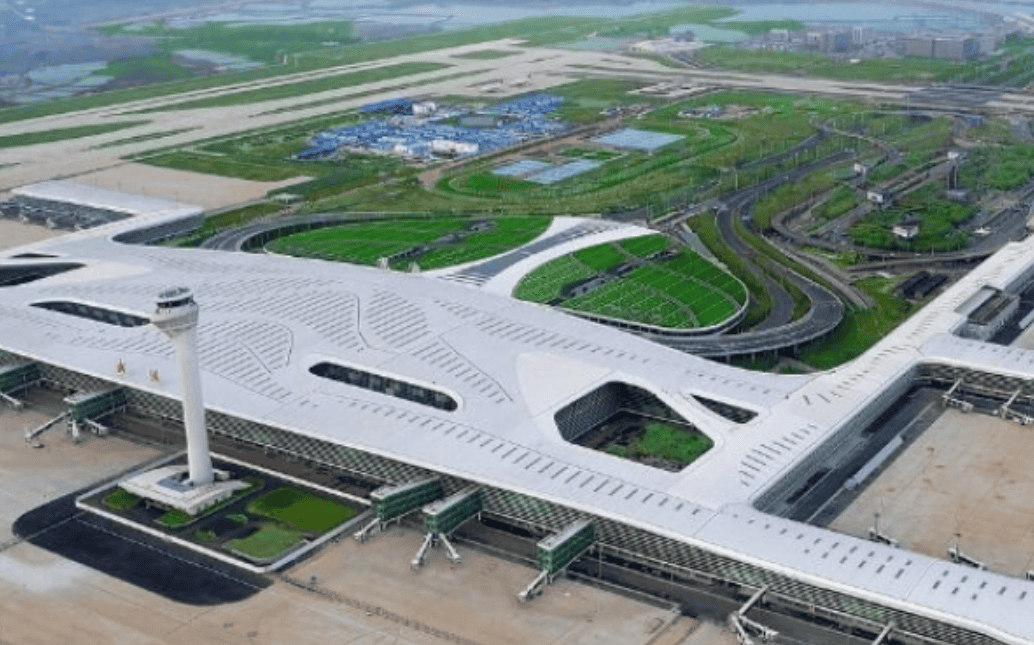
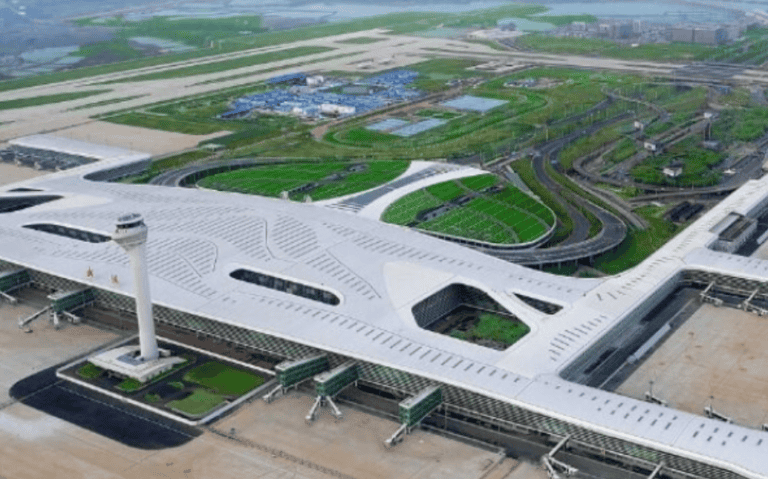
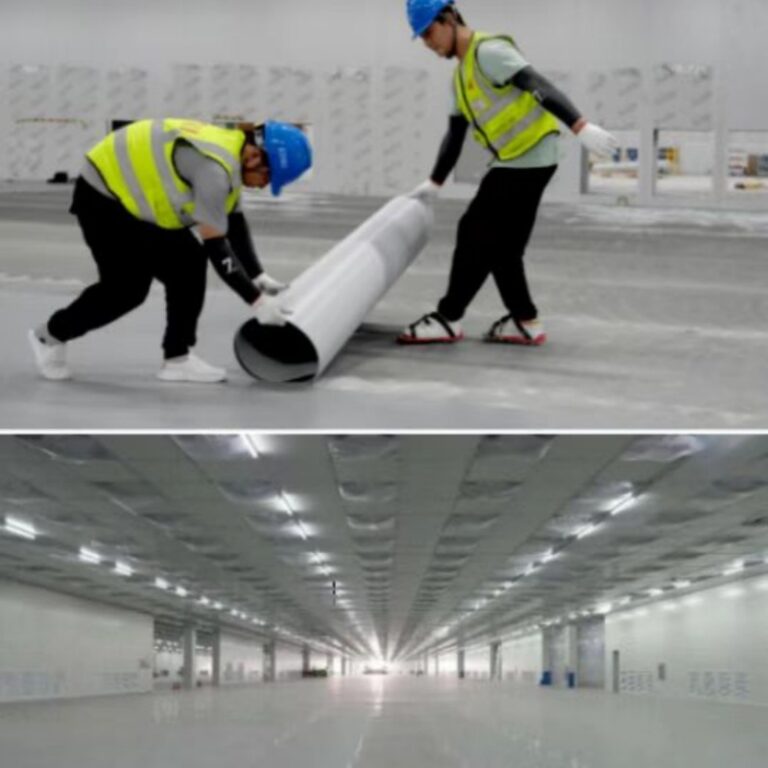
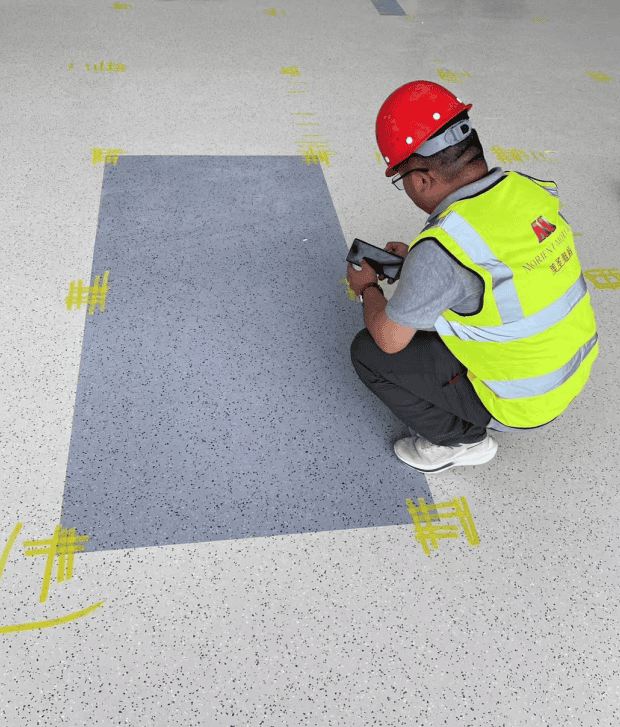
The T2 Terminal renovation at Wuhan Tianhe International Airport is already complete and open to the public. The departure and arrival halls use 3.5mm rubber flooring from Gaoke, covering 18,000 square meters.
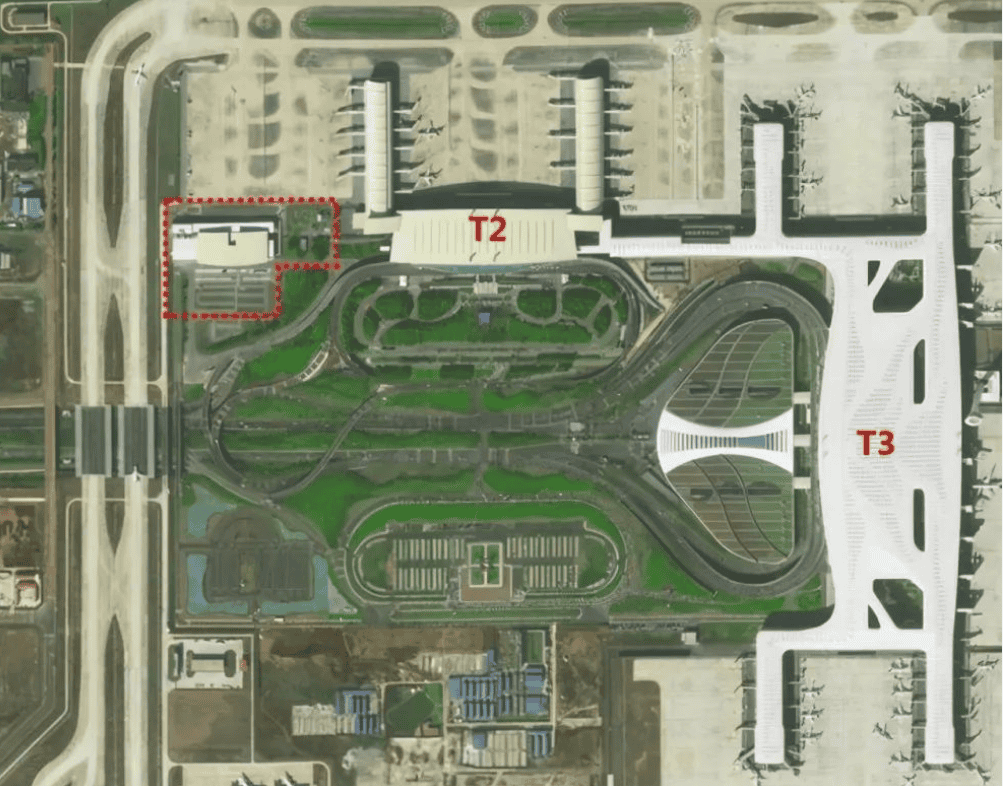
The rubber gets all the attention, but what really determines whether this floor will last is the three layers beneath it.
Layer 1: Primer, Giving the Floor a Fighting Chance
Concrete is porous and dusty. Pouring self-leveling compound straight onto it will get you into trouble; it won’t bond well, and hollow spots will show up later.
That’s where primer comes in. We used M318 Water-Based Primer. It seeps into the concrete, seals up those tiny holes, locks down dust, and leaves a sticky surface for the self-leveling compound to grab onto.
Attention: One thin coat is enough. Any thicker and it can peel off later.
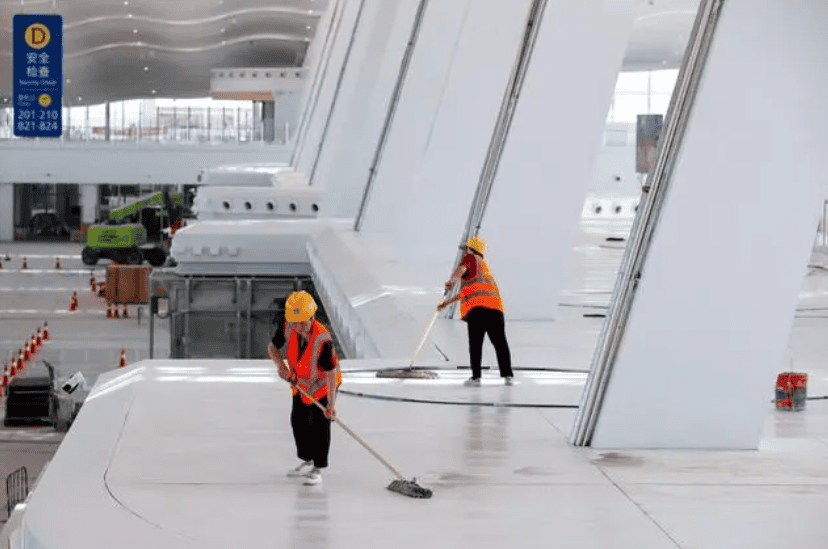
Layer 2: Self-Leveling Compound – Making the Floor Flat
Rubber flooring is picky about flatness. If the surface underneath isn’t smooth, you’ll feel hollow spots when you walk on it. Seams will curl. The floor will wear out faster.
We used M530 Self-Leveling Compound for the job. Pour it on, and it flows out flat on its own, filling in low spots and smoothing out the rough stuff. Let it dry, and you’ve got a solid, level surface ready for flooring.
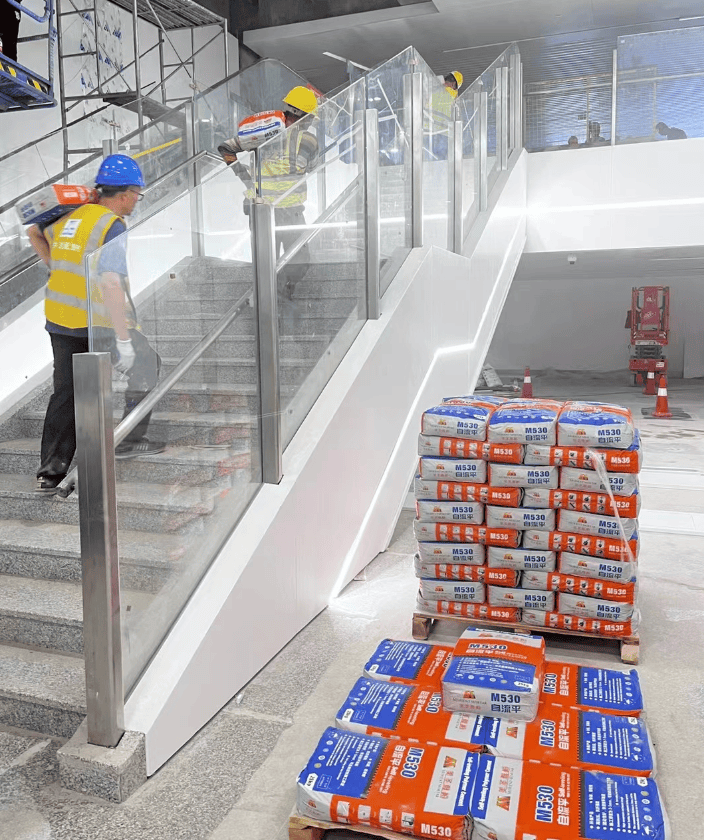
Attention: Keep the room above 10°C. Below 5°C, don’t do it; it won’t cure right. Also, stay off it while it’s drying.
Layer 3: Adhesive – Holding It All Together
Rubber flooring is heavy, soft, and moves with temperature changes. Regular glue just won’t hold up over time.
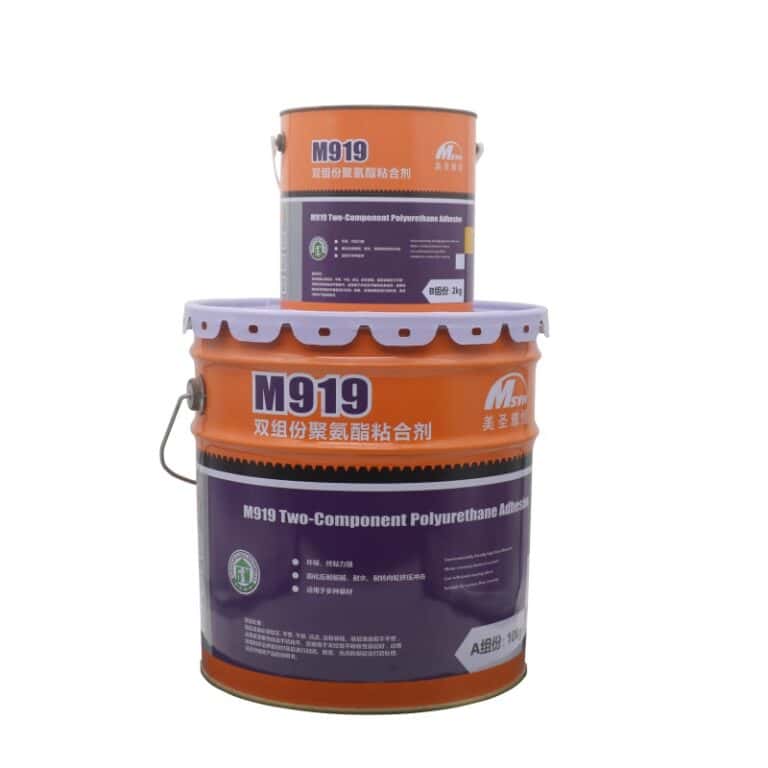
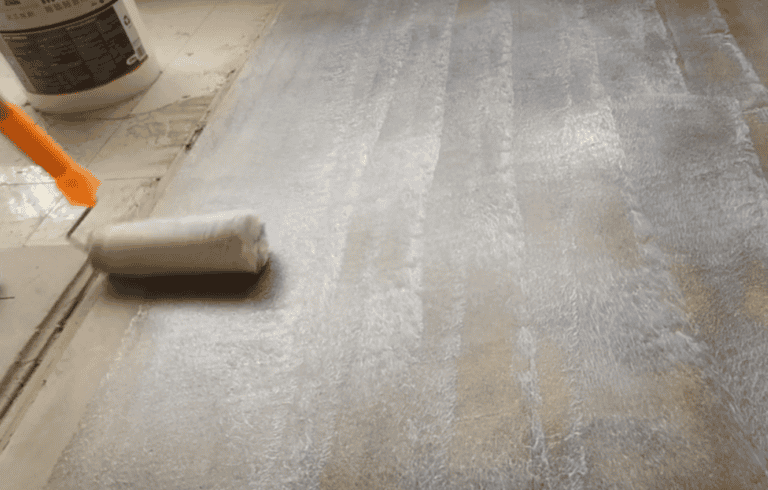
We went with M919 Two-Component Polyurethane Adhesive. You mix two parts together on-site, and it cures through a chemical reaction rather than just drying out. It grabs hold right away, flexes with the floor’s natural movement, and keeps its grip for years — even with heavy foot traffic day in and day out.
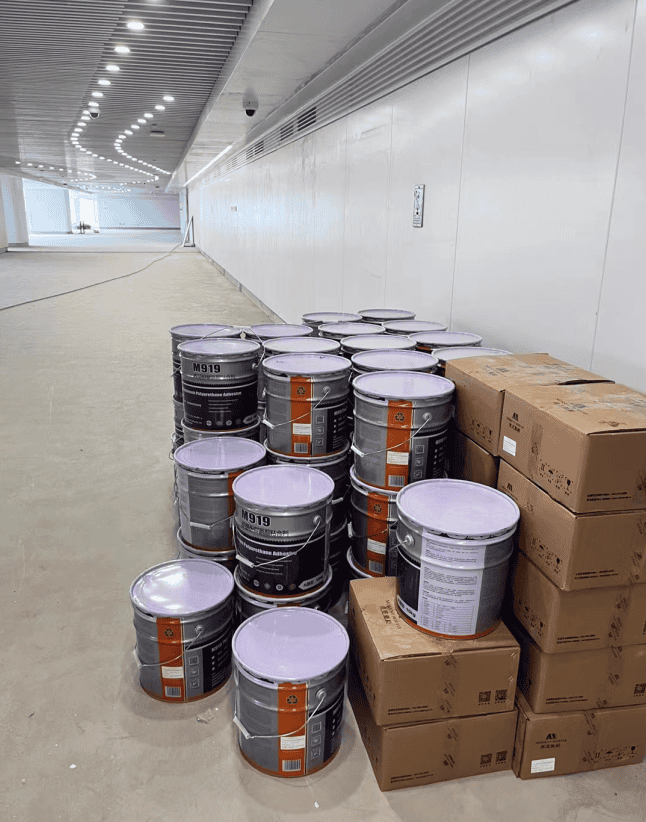
A quick word: Once mixed, you’ve got about 30 to 60 minutes to use it, so don’t mix more than your crew can handle. Wait until it turns semi-transparent before laying the floor.
Why the Stuff Underneath Matters More
People spend time picking out the perfect floor, then treat the adhesive and primer as an afterthought. That’s backward.
If a tile gets damaged, you can replace it. But if the glue or primer fails? The whole floor has to come up. That’s expensive — way more than doing it right the first time. For the T2 Terminal, all 18,000 square meters were covered by these three products.ucts. The terminal is up and running, and the floor is holding up fine under thousands of passengers every day. That’s what matters.
If you’ve got a flooring project coming up — at an airport, hospital, school, mall, or office — feel free to reach out. We can talk about products, or just share some lessons from the jobs we’ve done.